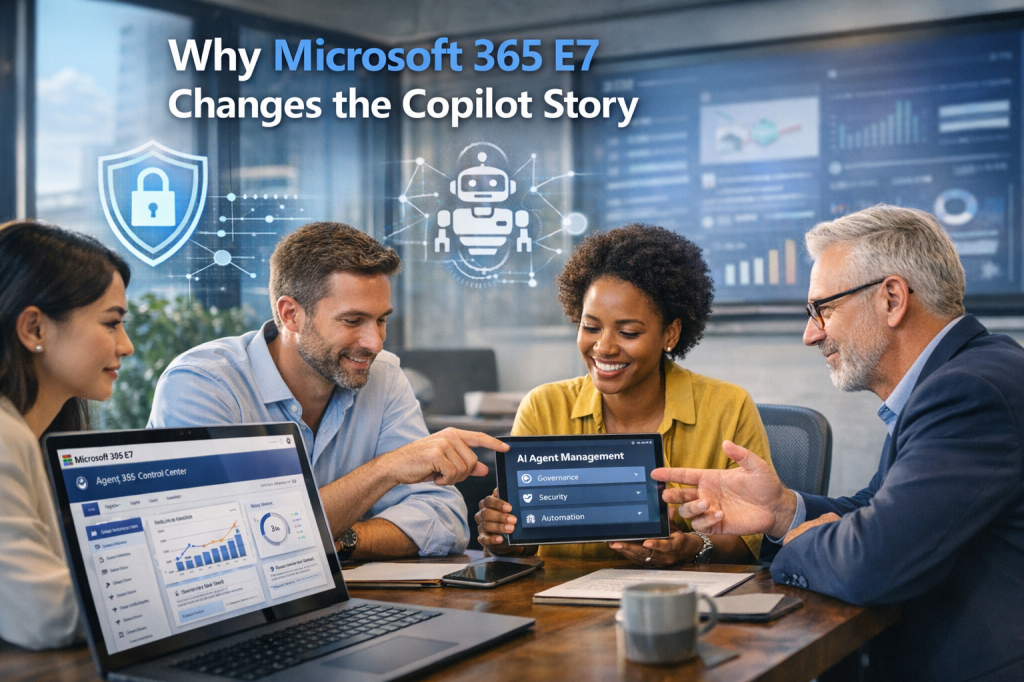
In this post, I aim to provide a comprehensive overview of the most recent licensing update in Microsoft 365, specifically the introduction of Microsoft 365 E7.
As you may be aware, I am not an expert in licensing matters and typically refrain from discussing licensing in depth due to its propensity for change, which renders statements and content liable to become outdated swiftly. This is merely a brief overview; for the most current information, it is advisable to consult the official Microsoft website concerning licenses or seek guidance from your trusted licensing advisor.
For months, the Microsoft ecosystem was buzzing about a new top‑tier Microsoft 365 license. Last week, Microsoft confirmed what many partners and customers already expected: Microsoft 365 E7, the Frontier Suite. Unlike previous licensing updates, E7 is not just another bundle. It represents a clear shift from AI experimentation to enterprise‑scale, governed AI operations.
What is Microsoft 365 E7?
Microsoft 365 E7 combines four pillars into a single enterprise SKU:
- Microsoft 365 E5 as the security and compliance foundation
- Microsoft 365 Copilot, embedded across everyday work apps
- Microsoft Entra Suite for identity, access, and conditional controls
- Microsoft Agent 365, a centralized control plane for AI agents
Microsoft positions E7 as the foundation for a human‑led, agent‑operated enterprise, where AI agents can act securely and at scale, not just assist individual users.
General availability is planned for May 1, 2026.
Why E7 is different from E3/E5 + Copilot?
With E3 or E5 plus Copilot, AI mainly supports individual productivity: summarizing meetings, drafting content, or analyzing data.
E7 changes the model:
- AI agents become first‑class, governable entities
- Organizations gain visibility, control, and security over agent behavior
- AI moves from “helping users” to executing business processes
Agent 365 plays a key role here by providing centralized observability, identity, and governance for AI agents across the tenant.
What this means for customers and partners?
For customers, E7 offers a clean, integrated way to scale AI responsibly, especially in regulated or security‑sensitive environments.
For CSPs and partners, E7 enables:
- Clearer E5 to E7 upsell scenarios
- New consulting opportunities around AI governance, agent strategy, and process automation (to be honest, these are already there since a while but now Microsoft partners must be able to deliver it to get and keep the AI transformation going!)
- Eligibility for Microsoft accelerators and incentives aligned with Copilot and Agent 365 adoption
In short, this means less stitching together, more platform thinking.
Conclusion, opinion and summary
Microsoft 365 E7 is not about adding more features. It is about operationalizing AI.
In my view, E7 marks the point where Microsoft stops selling AI as an add‑on and starts delivering it as an enterprise capability with accountability, security, and scale. Not every organization will need E7 immediately, but for those planning an AI‑first strategy, this license sets a new reference architecture. The rumors you might have read on LinkedIn and other platforms were right and the direction is clear, isn’t it? What are you thoughts? Long time overdue?

 erik365.blog
Comment / Kommentar verfassen