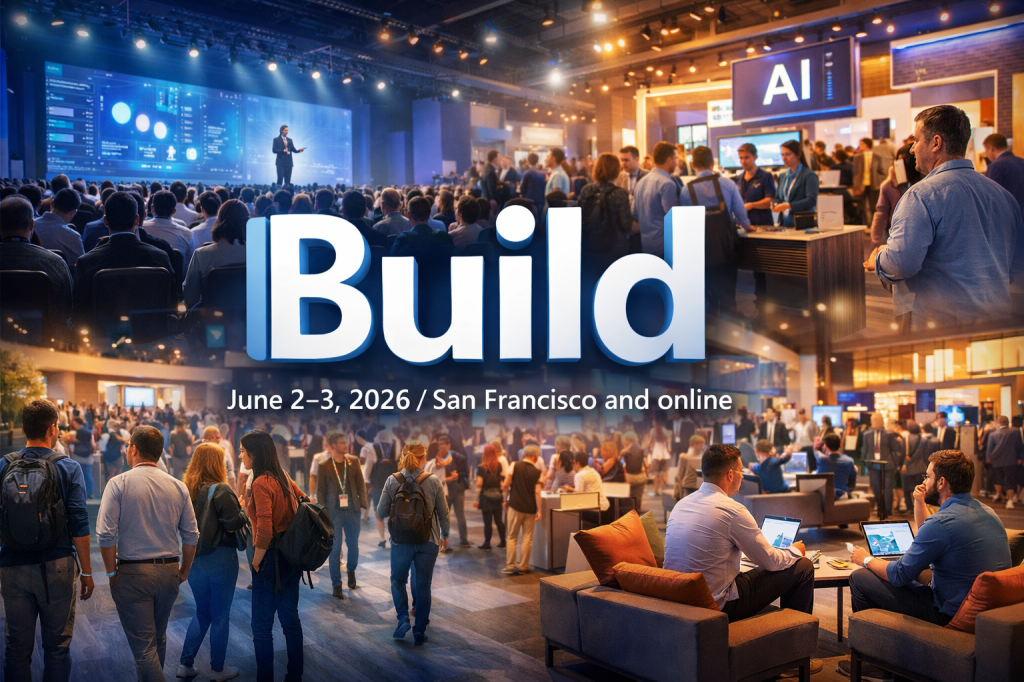
The next Microsoft Build 2026 takes places, on June 2-3, 2026, live from San Francisco and online, bringing developers together around one clear theme: AI as the foundation of every product, workflow, and experience. The event centers on deep technical sessions, hands‑on labs, and direct access to Microsoft and GitHub engineering teams, enabling attendees to explore the latest advancements in models, agents, data, and compute. The program spans keynotes, breakouts, demos, lightning talks, labs, and community sessions, as usual. Each format aims to help developers ship smarter AI systems and build multi‑agent applications at scale.
This year’s event emphasizes:
- Agent architectures and multi‑model workflows
- Copilot‑powered development and GitHub‑integrated build experiences
- Hands‑on coding with Microsoft Research models
- Expert meetups for real‑world implementation guidance
- Open source ecosystems and partner‑driven innovation
Conclusion, opinion and summary
Given the trajectory of the last years, I fully expect Build 2026 to be entirely AI‑driven across all tracks, with Agents taking center stage ranging from developing lightweight agents to enterprise‑grade orchestrated agent systems.
In the Modern Workplace domain, this will likely manifest through deeper integration of agents which could be built into collaboration, communication and business processes. As in previous events, I anticipate that classic foundational topics might again receive little to no dedicated coverage. First of all, it’s not Microsoft Ignite and second, while understandable due to limited stage time and the overwhelming focus on AI.
Hopefully someone will mention, again, that AI can only deliver value when the underlying identity, communication, collaboration, security and governance foundations are solid, and many organizations are still far from that point, in my opinion.
For Build 2026, I hope to see a few touchpoints e.g. to Teams Calling, Meetings and Devices, Azure Communication Services, or Dynamics 365 Contact Center that highlight how these foundational workloads evolve or could get further extended.




Comment / Kommentar verfassen